

AI-generated slop is flooding the web and more and more browsing is done by bots than humans. Dead internet theory is becoming a reality and many are grieving by looking to an old internet. It seems pretty clear by now that many of these things are now irreversible and an inevitable part of our future reality.
As horrifying as it has been to watch, human things made with lots of care on the web feel more important than ever. Contrasted again the masses of low-effort, low-care things being put out online, things made with the spark of love and passion shine brighter than ever. I can feel a palpable increase in the waves of appreciation for small, personal, handmade web spaces.
Amidst all this despair, there’s a significant sense of hope for new possibilities.
For a long time, we’ve been stuck in what I would call a local minima in the development of the Internet. Major technical progress has been made and cultural process on the edges1, but mainstream work from the large players that define our internet experience have pinholed on narrow goals: new platforms to maximize audience growth and smaller versions of the same devices. Trying new things has become nearly impossible, and there hasn’t been enough incentive for individuals to switch. People can agree that they want to doomscroll less, that the internet doesn’t make them feel good, but none of it has been bad enough to warrant the cost of playing with new alternatives.
But AI slop and automated browsing has made the future is uncertain. For the first time, these platforms don’t seem to be in control of what is happening anymore. There’s a golden opportunity for new, collective imaginations of what we want the web to look like2.
If all content is optimized for our eye balls, what are ways of embodied, interaction that can exist beyond an endless feed? If bots eventually handle all functional browsing like filling out forms, coordinating meetings, etc., how does that open space on the web to best support human belonging, creation, expression, and care?
Can we make the internet a space that helps us become more ourselves rather than one for pure utility?
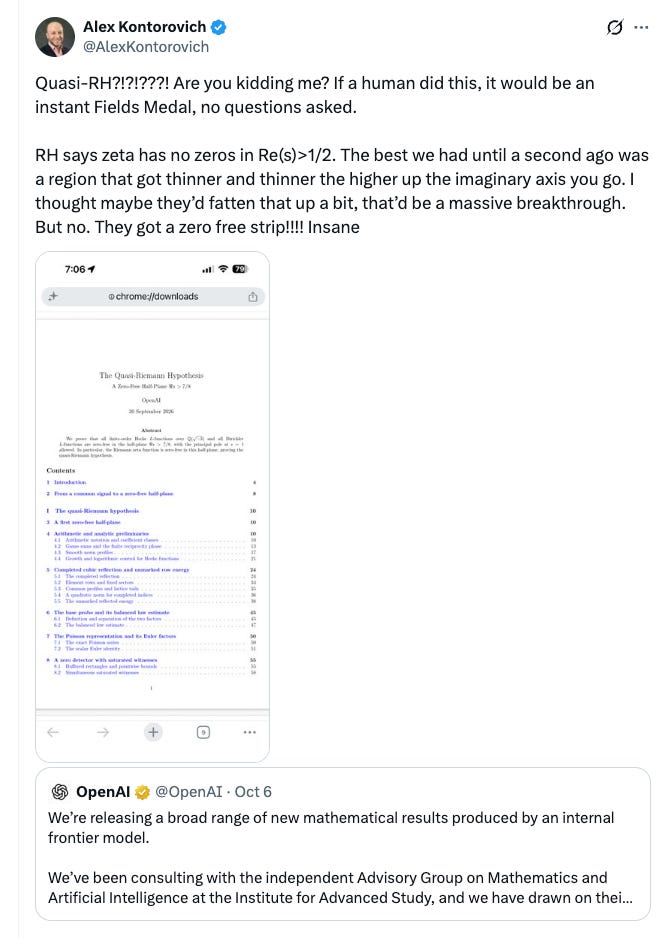
OpenAI just released 700+ new mathematical results solved with its models. The average problem used the equivalent compute of 3 hours of thinking on a ChatGPT Pro subscription.
In the future, it seems clear that any problem that can be defined will be solvable, and that our time will be valued very differently.
So what do we do with our time that has value?
I think we will spend it on:
open-ended problems that resist clear definition, evaluation, or success criteria or
things that lose their value as soon as you ask a machine to do it for you
I believe browsing falls into the latter. It’s valuable because of the journey, not the result. And as many traditional browsing are automated, i think it will actually make manual browsing more important and desirable.
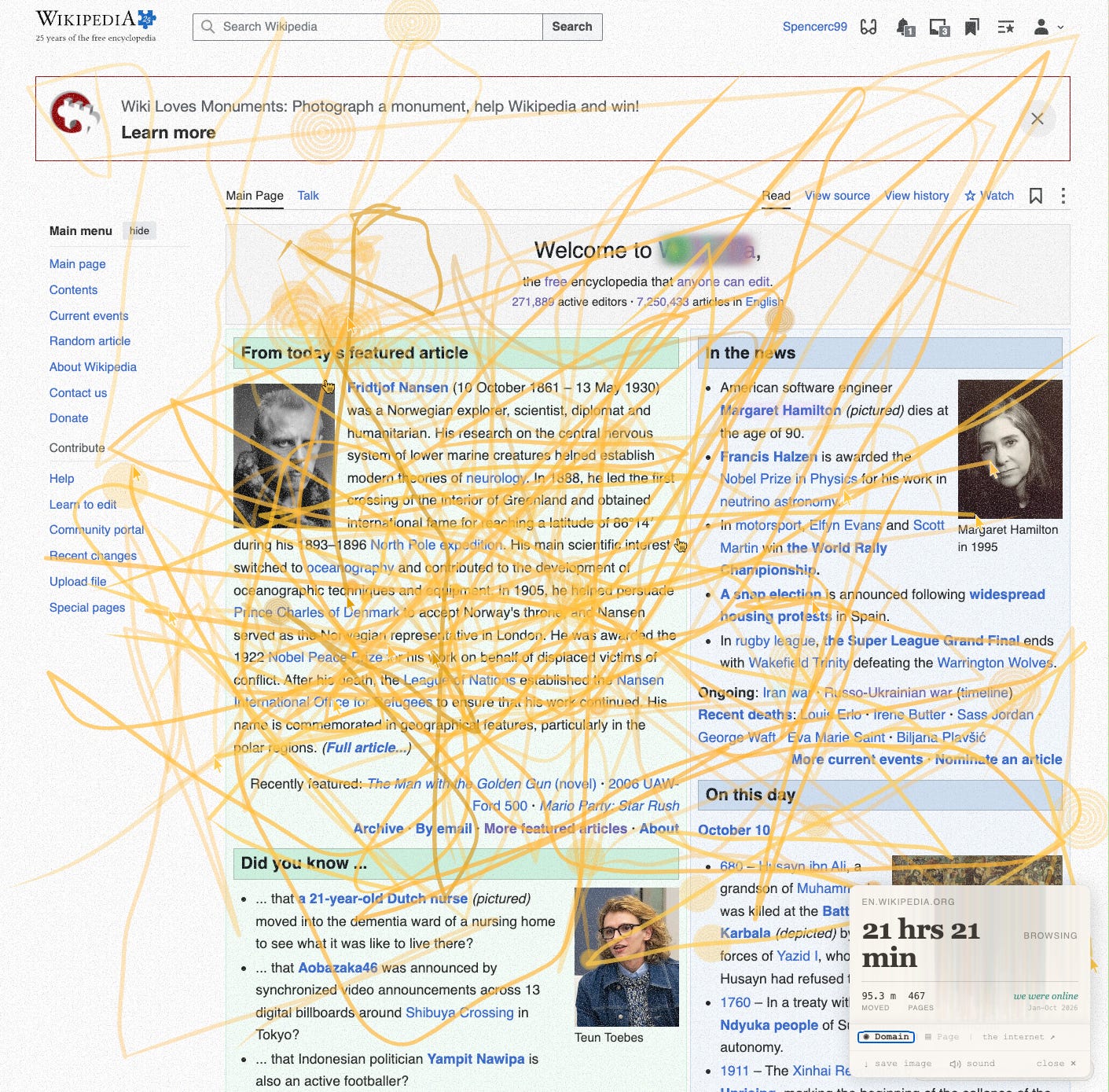
We still value walking around our neighborhood and buying from local stores even though we could get everything from the Amazons of the world. In the same way, we will still browse the Internet even when we can ask machines to to complete any task for us.
With the space to experiment, can we make more benches for the web, build tools to enable anyone to create online space, and build the social network that was promised on top of the open web? These are all the kinds of questions (and hopes) that I’m pursuing with my work on we were online and playhtml—creating a public browsing environment that bakes human presence into how you browse and an open-source tool that enables any website to become a live, shared space.
Of course, it’s not clear that this future is certain. At its worst, these technologies will condition us to maximize individual convenience and efficiency at the cost of community, finishing the quest to eliminate friction that modern business software design has started. But at its best, these technologies can be collectively directed, developed, and governed to disrupt the largest players and convince us to create more sacred spaces that are just inconvenient enough to give us the spontaneity, connection, and care that we so need to be our best selves.
We have a chance to make the internet feel more alive than ever. Let’s not waste it.
Updates & Asks
I’ve been very lucky to receive the gracious attention of several interviews over the past months with CultureHub and Naive Weekly. Thank you to Blair and Kristoffer!
Munus and I got to gush about our favorite parts of our class Building Benches for the Web with SFPC on their blog
I’m truly having a lot of fun making collages with the images, buttons, and other internet scraps you come across while browsing using wewere.online (hope to release next week!). Also thinking about fun content series like drawing a real-world object with internet pictures of it, doing a portrait of someone else using their scraps, or trying to guess the kind of person someone is from their scraps. Let me know if you have any ideas!


This dispatch was sent to 2777 inboxes. My writing is always free and open, but I am independently funded and appreciate any support you can offer. Consider sharing this with a friend and becoming a patron (or for those without Github, subscribing on Substack) for the warm & fuzzy feeling of supporting an indie artist (and access to the community & works-in-progress).
Thank you to the 28 people who supported my independent work.
There have been significant “big-shot” developments in the technical capabilities of the Internet that are starting to open up more possibilities in the cultural space as well! html-in-canvas, WebAssembly has moved beyond a proof of concept to enabling things like efficient local-first work with SQLite in the browser, and decentralized social protocols have amassed significant usage and flowering of multiple platforms.
I enjoyed New_ Public’s great presentation about this!