

Since the start of the year, I’ve been working on and off on we were online, an online multiplayer world that turns the entire internet into a living, shared space. It’s the ultimate evolution of my work with playhtml to not only create the infrastructure for anyone to make their own digital social spaces, but also to bring these new, strange, fun interactions to the entire internet in hopes to make browsing feel connected to other people rather than a solitary experience.
I just finished my SFPC class, Building Benches for the Web, and
I’m experimenting with trying some more rambling every week around the rough progress of it. Think of them as lab notes where I welcome your feedback as a close listener and reader :) Thank you in advance for being on this journey with me!
Here’s a summary:
we were online (WWO) creates a shared, living world on top of the existing internet so that we can encounter each other as we browse the web. I think eventually this points towards beocming a new browser, but for now, it is a browser extension for accessibility.
In this world, everything on the Internet becomes material for connection. Assets, buttons, and other components can be created, grown, moved, taken, and gifted. Pages have memory and show the wear of use. Cursors become digital appendages that allow us to bump into others who are there at the same time as us.
By allowing us to see each other and affect the pages we visit, isolated browsing becomes the site of serendipitous encounters, websites become archives of our collective traces, and the Internet becomes more like a hometown we share and co-create.
The Internet as a public space
The main goal of WWO is to turn the internet into a public space, more like a lively city, park, or plaza in the physical world and nurture the feeling that we are all part of a larger community. I believe we’ll always have to spend significant amount of time in digital space, so we have the responsibility to make the environment as nourishing, playful, and creative as possible.
To that end, WWO is more of an ambient experience that intervenes in how you normally browse the web. You might find traces of other people on websites (like the link patina on Wikipedia) you visit or only chat with them when you’re there at the same time. These experiences can vary from site to site and be customized by individual website developers (see Infrastructure heading below)
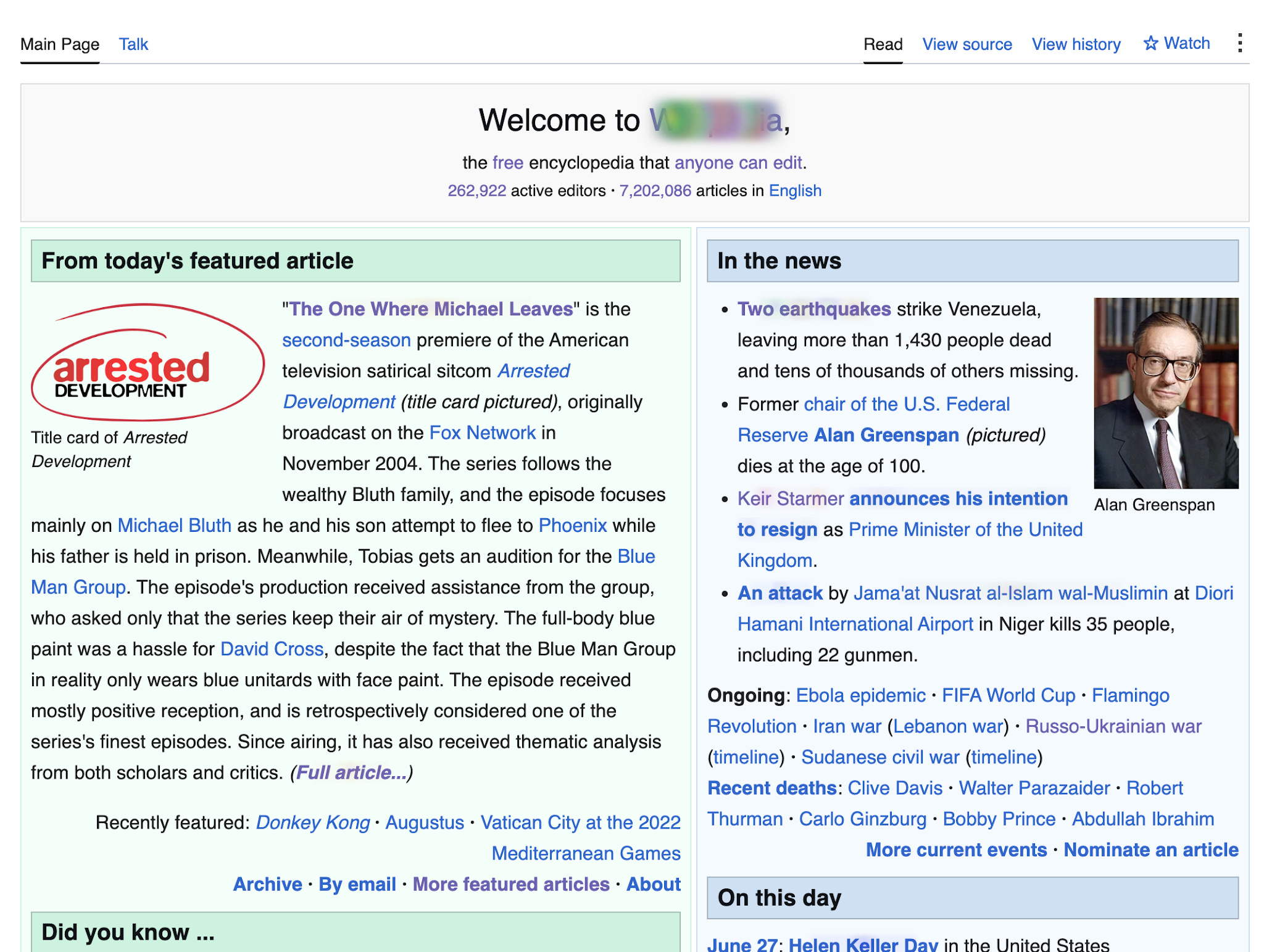
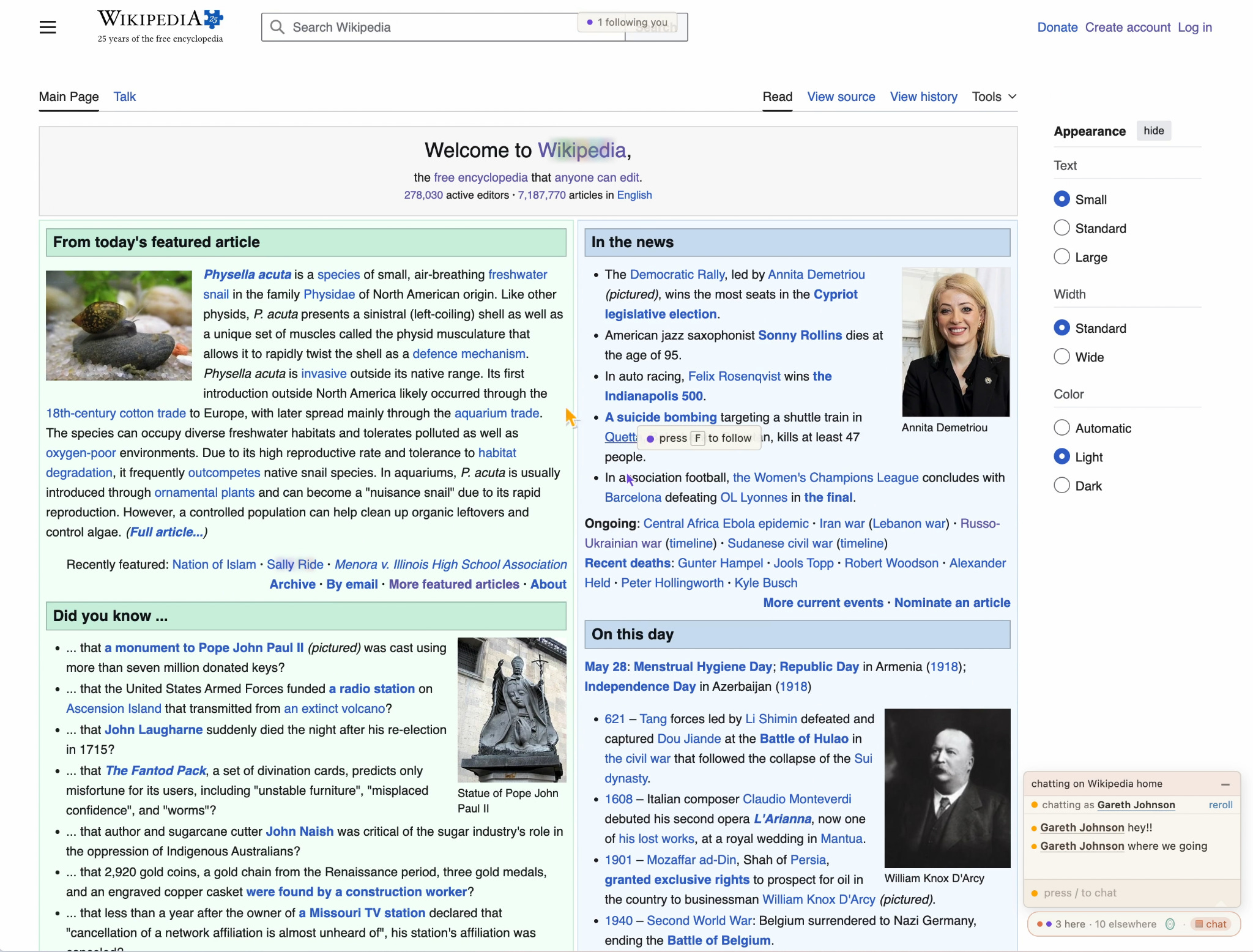
I’m trying to balance how many social interactions I introduce as part of the entire experience and which ones come from the individual websites — the main priority is to have a conceptually simple but expressive foundation for emergent social behavior to unfold.
I’m also trying to have a mix of things that can accumulate and show the history of people and places and intearctions that are ephemeral and allow for more intimate exchange in real-time. As well as a mix of interactions that work well with strangers to make you feel connected with a larger community / public and more intimate interactions that should only work with friends or people who you are more familiar with.
letters to websites: randomly show folded input boxes in the margins of a website for you to find and you can click to leave your own letter that adds on to the chain of letters
cursors see other cursors on any page and emote with them… and maybe seeing the trails of previous people who have passed through the page?
AI Slop cleanup: can we have a collective goal that unites people? As the internet gets more filled with AI-generated content and SEO spam, maybe we can help clean it up like having a regular community trash cleanup day in neighborhoods. The current experimental design lets you grab caution tape and mark off this content on websites. We could potentially expand it to mark off the results when they show up in Google images / search too?
find my friends (online) like the spotify listening activity for friends you add that are using the extension to see where they are browsing now and where they have been recently
internet commute (How do we make the modern stumbleupon? what does it feel like to browse more slowly?) maybe a portal that appears on websites in the margins that takes you to a random website that someone else went to from that page and/or some sort of “train” that you take to commute and will drop you off at random websites that people have been visiting lately. maybe a map shows all the places that people have exlpored?
Design Principles Across All Features:
see more in Interaction Design
Exploration: the more off the beaten path / less traveled a place is, the more valuable it is to encounter it
Entropy: things fade, age, decay without human intervention. Things and actions made in highly visited places decay very quickly while those in less busy spaces can stay a long time
Trust by design: nothing another user can do to harm you directly. leaves intent open so that anything can be interpreted as prosocial and kind
Care, returning, accumulation: every feature should enable one of these three
Infrastructure
WWO is built on playhtml, an open-source library for creating communal web experiences, the game is designed to be customized and extended by its players. Individual websites can create interactions that respond to live events on other websites and change behavior depending on a user’s history and personality. Traditional domain silos become open islands that grow dense with connection and come alive with the personality of dozens of personal websites.
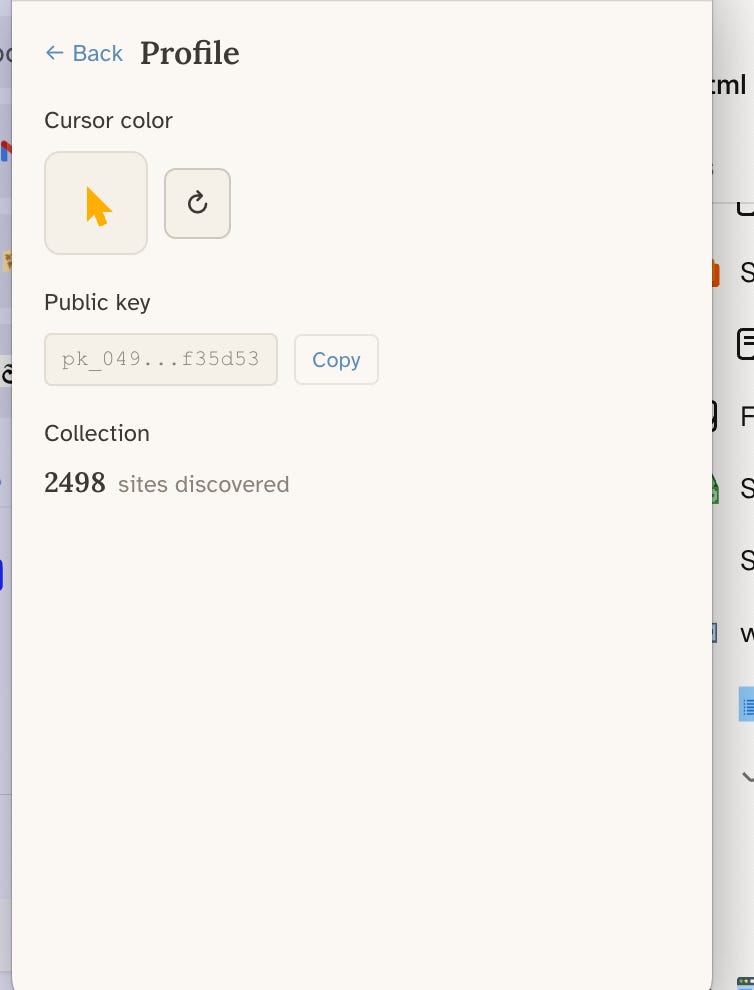
WWO provides playhtml a persistent identity in the form of a key that travels with users across different websites. This enables the design of interactions that reward people for coming back over time (like someone becoming a regular on your site) and having interactions unfold across multiple websites (for example, if i brought a chair from my website over to a Wikipedia article).
Strategy / Positioning
The game should focus on a feeling of fun, engaging stewardship and collaborative world-building in service of a better, more human internet. Playing the game should inspire people to create more textured, personal websites.
What behavior do I want to encourage?
surf, explore, spend time in all the parts of the web that have been lost in social media world
linger, wait, dig, learn about the people and the history of the sites you visit, about the labor behind them
create, imagine, dream, make new worlds for people to enter, build yourself a digital home, regrow / rehabitate the web, drive more people to the native internet rather than closed platforms
What is the core gameplay loop?
farming: gathering resources from the websites that you visit, crafting new elements based off of this? gaining some sort of currency for the time you spend on the internet and the actions you take?
resource spots that can be stocked with different media: links, assets, songs, messages
what if elements of a website automatically become “inventory” items?
like the fonts, assets, colors,
authorship & provenance of the things you make
encourages surfing / exploring less visited parts of the web because they are less picked over
piggybacks off existing directories and curations of personal, textured web like https://projects.kwon.nyc/internet-is-fun/
creating: should somehow encourage people to create interactive elements and then eventually create their own website? i should be enabling a more handmade web... playhtml right now is inherently communal but it doesn’t necessarily have to be i guess? it also makes it easy to just have persistence in general...
minecraft - you can visit people’s worlds, you can remix the things people create
Possible interactions
stooping things from people’s websites and placing them on other people’s websites
an inventory that you can carry around
leaving interactive gifts for people on their website
for the owner of the website: e.g. a letter that opens up or a flower that blooms.
for visitors to the website: thank you letters
turning existing elements on websites into interactive playhtml elements
maybe AI can suggest which things would be good (generally images.. or others that feel like distinct “objects”: buttons, ...)
to make a game, you must have a website
probably does need to have some easier way to make, subdomains from playhtml or something
or piggyback on things like glitch, neocoties, etc. im not in the business of hosting websites
core questions
what difference in what you can do on extension vs website
core feeling that people should get
“wow!” joyful surprise in discovering the game for the first time
“wow!” - theres so much life in this to uncover
“damn” - there’s so much humanity and stories to learn about here
game mechanics / audience
inventory mechanic
respawn rate or single item, people can define drops on their websites
moments of vulnerability and emotion that come from that
when your hands touch on a webpage
interactions derived from different state
dynamic state: number of times watered plant
static state: number of times word rain is on page
things that website owners can program / game nouns
events like weather that are user created, programmable probabilities, are imperative and happen in response to a user action, or happen in response to a certain world state
objects: discrete interact-able things where their interactions affect the game, can be retrievable (items)
actions: the set of actions that a player can take with any number of objects, mapped to how they undertake the action.
player: a user participating in the game (visiting a website integrated or has the extension installed )
cursor: player’s avatar? main form of interaction. can be customized
Thank you to the 28 people who supported my independent work with a sponsorship last month, and a warm welcome to Ross and Nada.
Consider sharing this with a friend and becoming a patron (or for those without Github, subscribing on Substack) for the warm & fuzzy feeling of supporting an indie artist (and access to the community & works-in-progress).
Incredible vocation, can’t wait to see where this goes 💭✨