

I recently adopted a new tagline across my social profiles, those liminal spaces with sparse character limits:

software you can touch
I’ve long struggled with how to describe myself. If you take a tour through my old posts, you’ll find a weaving evolution of descriptors and terminology. Artist, engineer, designer, internet caretaker, creative technologist, writer, researcher. Nouns—traditional, evocative, and unconventional—come and go and shuffle back and forth.
I’ve cringed at how verbose I’ve had to be in describing myself. If you are a creative person, I’m sure you know the struggle of attempting to answer the dreaded question “so what do you do?” when meeting a new person. You’d think that after almost three years working on my own things that I’d have a good answer to this by now, but I’ve found that the clarity (or perhaps it’s merely confidence) comes in waves. Sometimes the answer comes smoothly, as natural as saying my name. Other times, it begins with a long pause and a stilted answer that makes me yearn for a do-over after.
I met someone recently who told me that they followed me because of this new tagline in my bio: “software you can touch.” So I guess something about it is working!
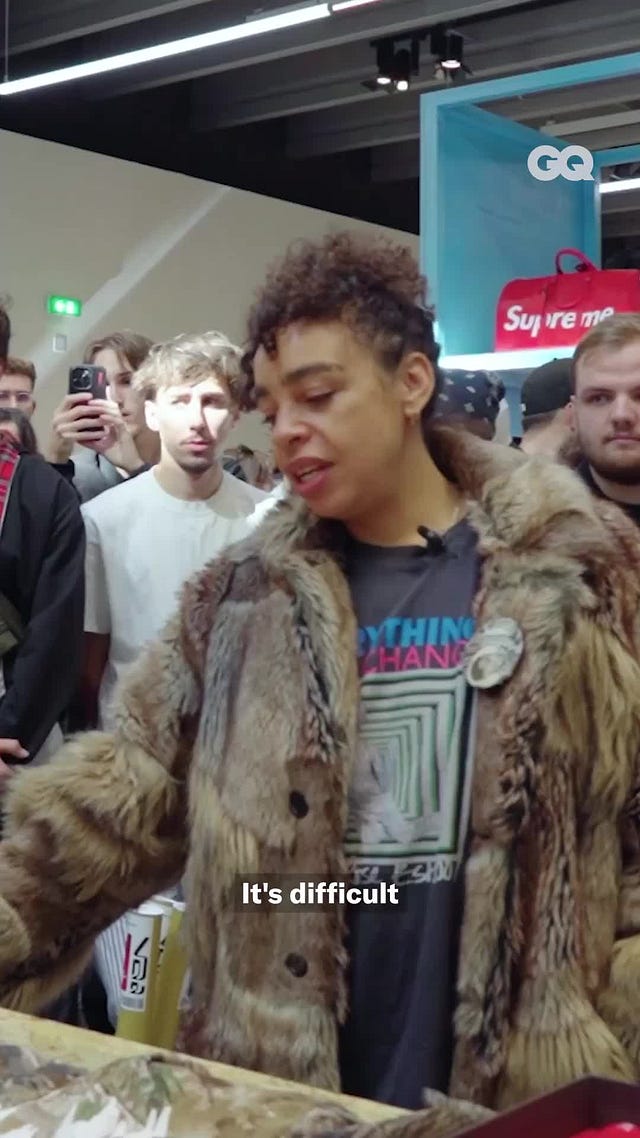
A tagline is basically a really, really difficult introduction. It entails condensing your introduction down into less than a single sentence. When there’s so little space for words, you start to overthink each meaning. What does it mean to say I’m an artist? What does it mean if I say artist before designer, designer before engineer? What do I really value when I have to choose what comes first?
It’s so easy to forget that words are hard. In fact, they’re probably harder now that making software is so easy. The shorter they are, the harder they become. You have less leeway to make your point, less time to convey a feeling. In many ways, coming up with a tagline is like writing a poem.
So why software you can touch?
I care about making things that live with us in the world and directly touch our lives, meaning I care more about continued impact than viral reach and tangible experiences than theoretical concepts.
How do you create something that lives with you? Being able to touch it is a good first step. It’s not locked behind glass, isn’t impossible to change, and doesn’t require a lot of prework to understand. It invites curiosity, participation, and ultimately, collaboration.
In Physical media: why we just want to feel something, Tiff writes about how touch is about more than just the moment:
This may be a bit of a stretch but bear with me: to touch is also to be seen. To touch is to ground yourself, to reaffirm your existence. An accidental dog ear, stains from sips of tea, shreds from pages torn out of a notebook all gesture towards some form of human presence. Past or present.
In the past, I’ve centered descriptions of my work around technology for community. I still champion communal computing as one of the guiding pillars for what I build. But what does it even mean to talk about community when the very systems that are tearing us apart from each other wave community around as their core values?
 Tiktok failed to load.
Enable 3rd party cookies or use another browser
A while ago, a mentor asked me “what does community mean to you?” The problem is that the term has been so overused as to become meaningless. Tech companies sling it around to justify their consolidation of power, and it feels a little silly as a rallying cry when there are masked men stealing community members off the streets across the US.
So instead, we get specific. To touch is also to be seen. To be seen is to become two rather than one. Repeat that motion tens, hundreds of times and a community is formed.
Things we can touch cannot be theoretical. Touch is about intimacy, immediacy, a direct person-to-person connection. It is about breaking through the layers of abstraction, of bureaucracy, containers, and wordy defenses. It’s about piercing a line straight from one heart to another.
My work began with web works and have evolved to include physical internet vessels. I am continuously playing with intimacy and tangibility and how they intersect with us and our devices. Ironically, digital works are surprisingly tangible compared to many physical art pieces. They can often play out on our computers and phones, devices that we touch and immerse ourselves in day after day. It feels personal when we use our devices, an inherent closeness to our lives that isn’t present when we experience technology in a clean setting.
When I wrote touching computers to describe creating a clay vessel to hold my personal website—a body for my digital creation, I thought about touching in two ways.
I created a physical body for my digital home that I could touch with my hands and
I had an emotionally meaningful experience with a website, through this body.
This physical experience had transformed into an emotional one. And it doesn’t stop at emotional connection. When you become intimate with something, it makes it feel like something you can change. A mental connection is developed—an understanding of how the other behaves in relation to you.
Touch develops connections across our fields of perception: physical, emotional, mental. It disarms us to open up new connections that we didn’t know were possible.
And once we can touch software, we can learn to hold it—turn a single moment into a continued relationship—one that we care for, maintain, and nurture.
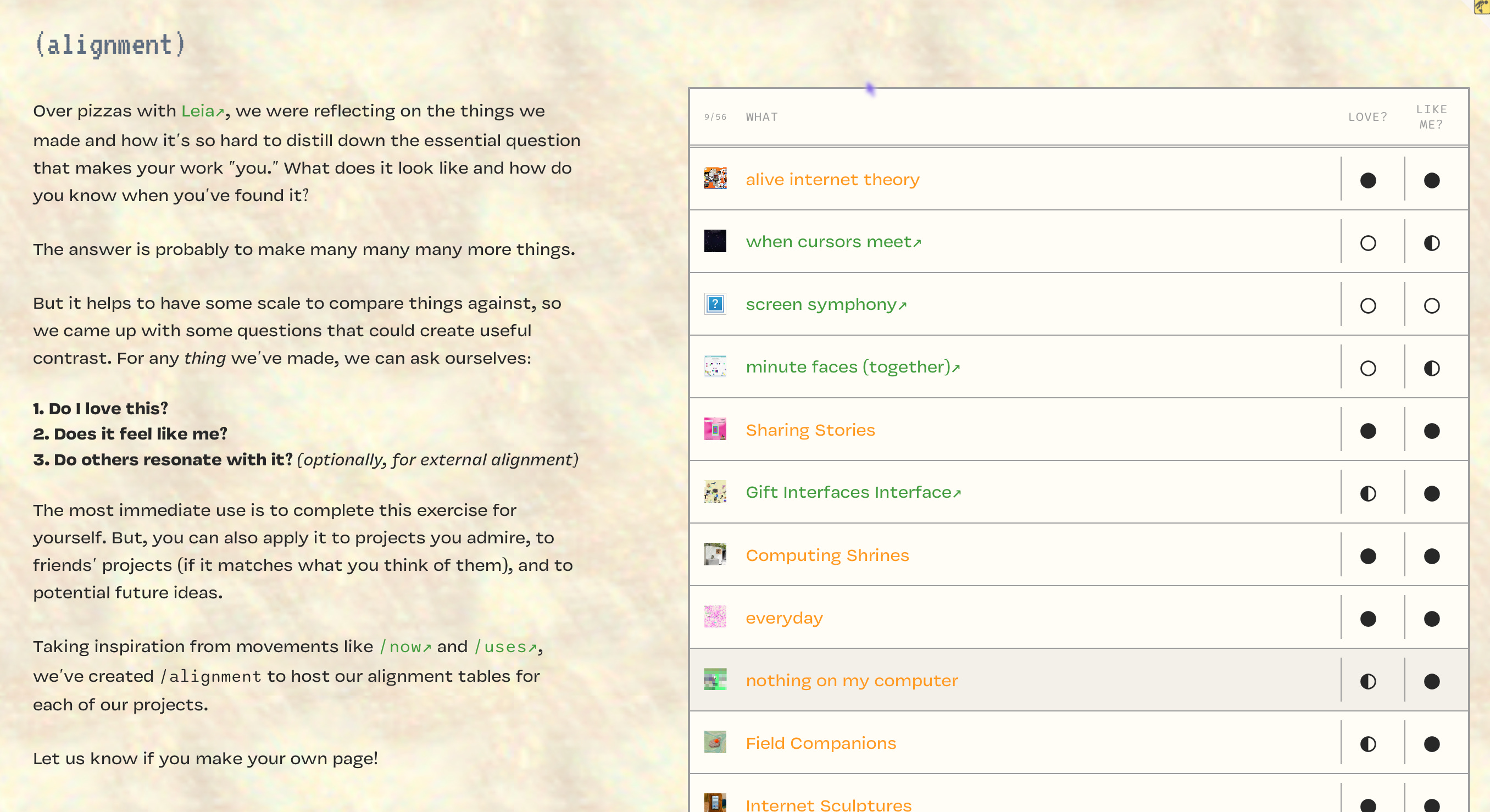
Over dinner with Leia, we talked about how we feel about the things we’ve made and the struggle of artists to define ourselves. What is the one question or sentence that captures what we care about? We came up with a few questions to apply to projects to help us identify it.
Do you love it?
Does it feel like you?
We’ve both published this alignment exercise on our websites (mine, L’s). If you do it yourself, let me know!
I don’t know what caused me to land on this new mantra. There’s no doubt that it’ll likely change over the years, if even that long. But for now, this feels like a culmination of the past few years. Three years to find four words. Life sometimes feels like it moves so slowly, doesn’t it?
UPDATES
I’m writing this from the plane on my first business trip to Tokyo. I’ll be here for the next two weeks setting up an exhibition and participating in Future Vision Summit. Afterwards I’ll stick around Shanghai and Shenzhen for a few weeks. If you’re around or have recommendations for artful, interesting, or unusual spaces, let me know!
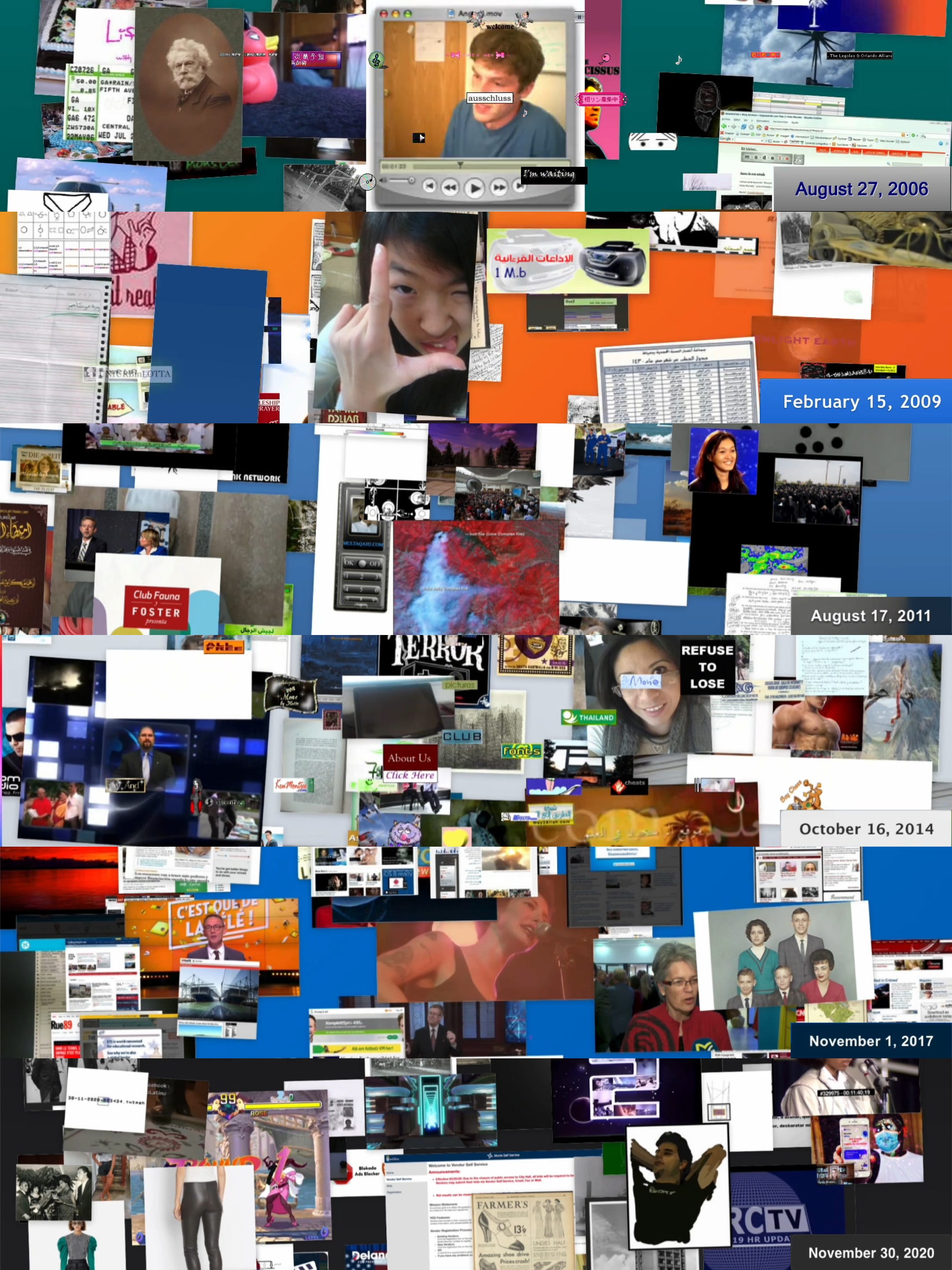
Since I wrote about alive internet theory, which is now my most popular post to date, I created a project by the same name for the Internet Archive’s celebration of a trillion webpages archived. check it out at alivetheory.net
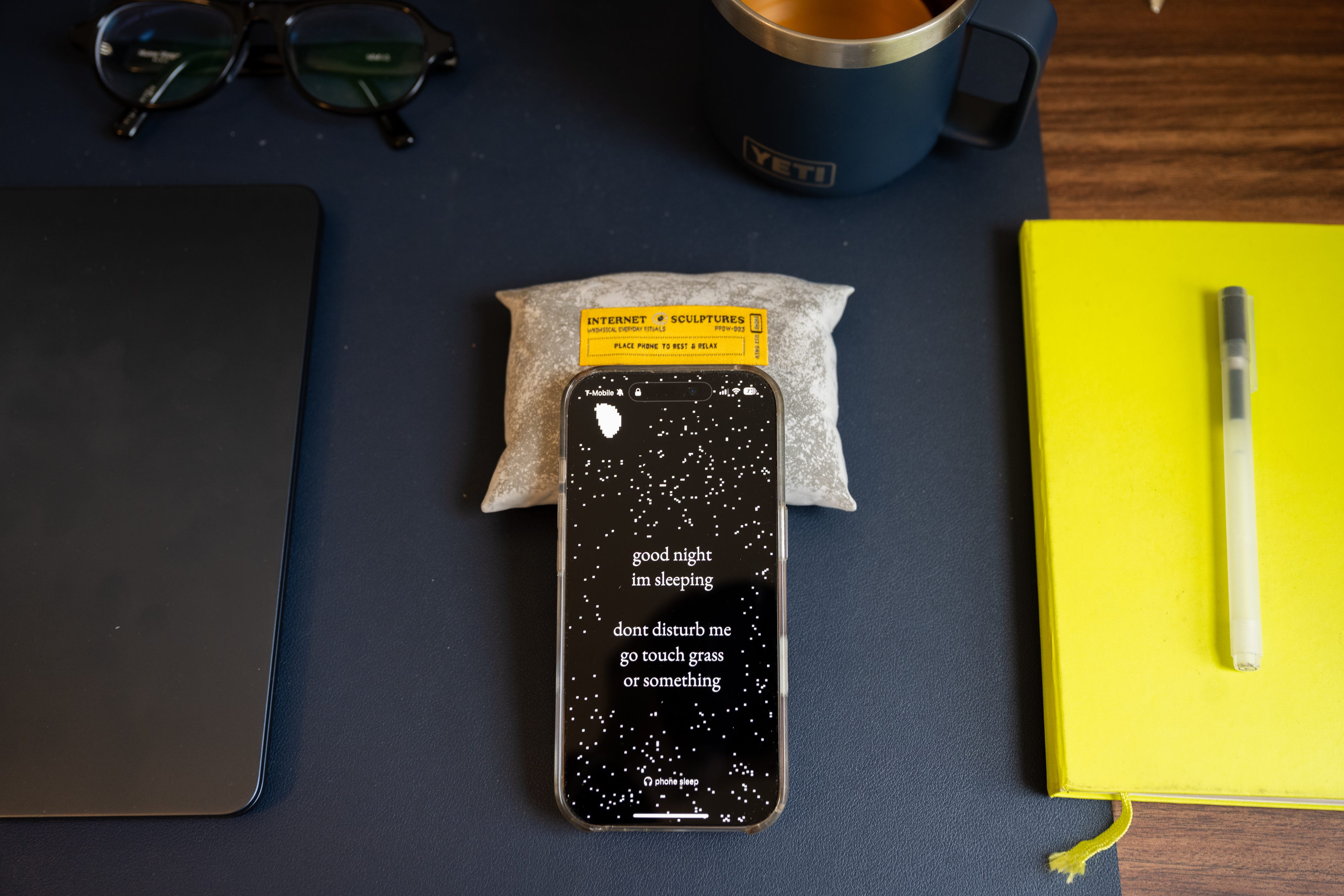
The Internet Sculptures shop just closed for the year! I launched the first new product, the Phone Pillow, a pillow that puts your phone to sleep, to a resounding success. thank you for all your support and any new orders will ship out next year :)
This dispatch was sent to 1779 inboxes. My writing is always free and open, but I am independently funded and appreciate any support you can offer. Consider sharing this with a friend and becoming a patron (or for those without Github, subscribing on Substack) for the warm & fuzzy feeling of supporting an indie artist (and access to the community & works-in-progress) .
Thank you to the 27 people who supported my independent work with a sponsorship last month, and a warm welcome to Aadil and Thaddeus.
“To touch is also to be seen. To be seen is to become two rather than one. Repeat that motion tens, hundreds of times and a community is formed.”
I love this description :)
In our generation I keep seeing a desire for tactility, closeness, tenderness and density rather than grandness, I think your tagline captures this yearning very well