

In December and January, I spent over a month in China, across Shanghai, Jingdezhen (the ceramics capital), and Shenzhen (the manufacturing capital). I visited factories and studios, art museums and phone farms, and tiny stalls and bougie stores. I haven’t been in China since 2008, so everything was new and exciting to me.
What follows is a condensed breakdown of all the observations I had (of which there are a lot because China just operates so differently compared to every other country I’ve been to). I’m splitting them up into 3 sections: physical culture, digital culture, and craft/creative culture.
This is part two: digital culture.
I had landed in China powerless. Nothing on my phone worked, and in modern China, nothing happens without the graces of your phone.
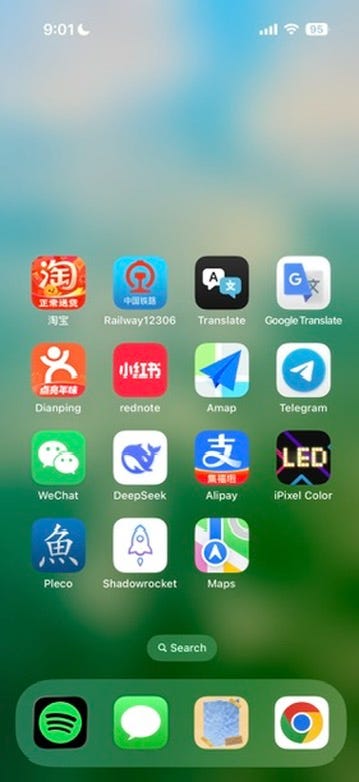
Over the next few days, I slowly reassembled my basic adult functions, one app at a time. Calling a car required Didi, navigating to places—Amap, researching restaurants and venues—Dianping.
The next thing I had to acclimate to were the QR codes. They’re everywhere and the barrier to getting anything1. And if you thought you don’t need a new app, unfortunately, you’re wrong.
These codes encode specific in-app urls which require you to download one of the main central Chinese apps, 微信 (WeChat) or 支付宝 (Alipay). Viewing them with the in-app scanner leads you to a “mini-program“ (kind of like a self-contained app store) to order from.
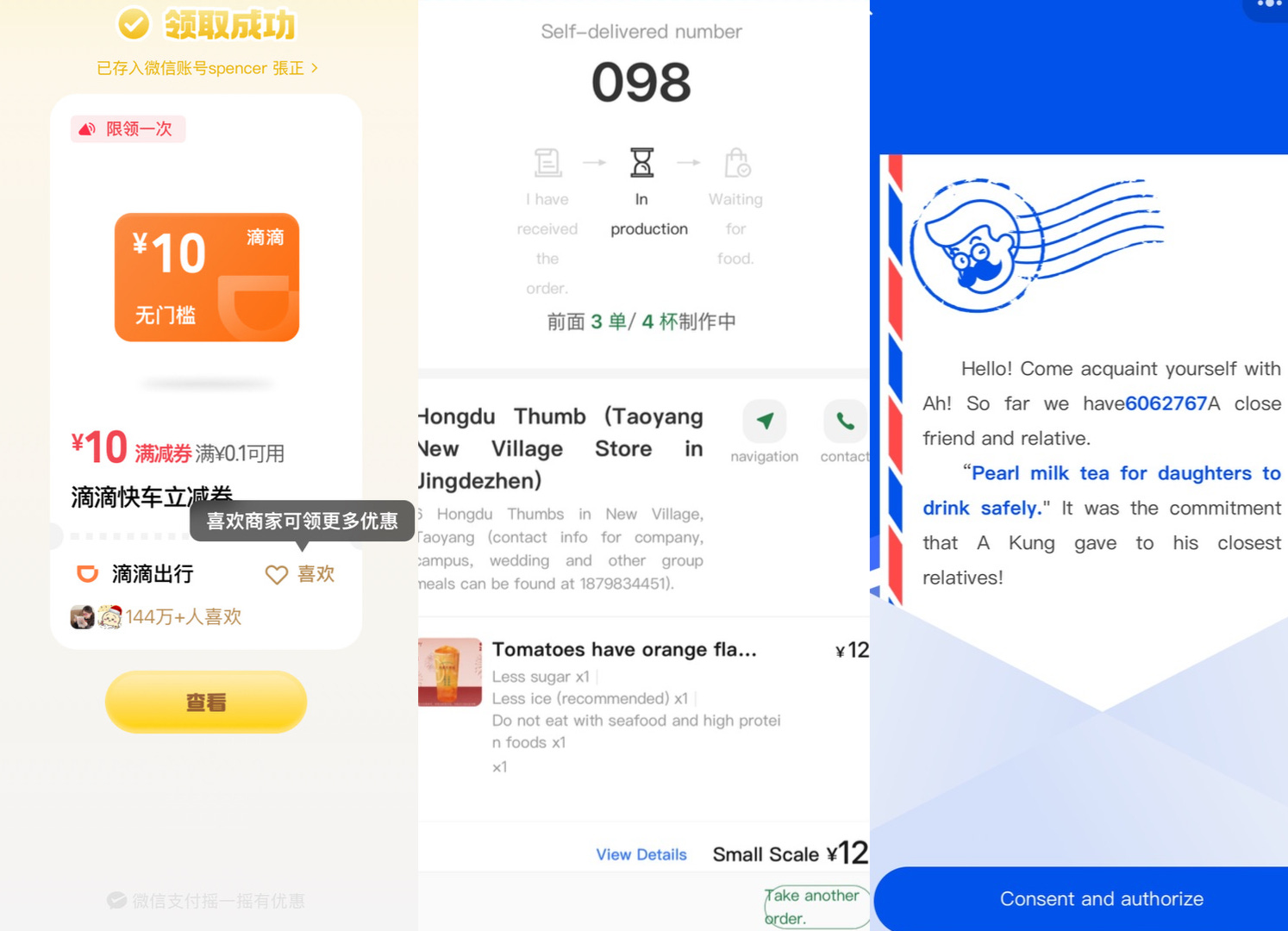
At the many Chinese-brand smartphone stores like Huawei that are never seen in the U.S. (because they are classified as a national security threat), I tried and often failed to access a normal “browser.” This makes complete design sense given that almost all Internet usage in China comes from mobile apps and, by extension, these mini-apps.
China’s Internet adoption has been primarily mobile from its onset. Since 2010, Western outlets were already reporting on the dramatic rise of mobile Internet access in China. By 2015, websites had all but disappeared from mainstream use in favor of these mini-programs or 轻应用 (literally translates to “light apps”).2
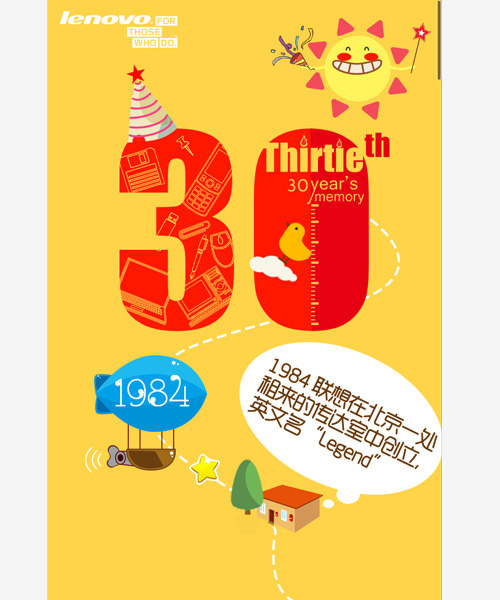
These early light apps functioned as single-purpose interactive flyers, celebrating corporate milestones, advertising movies, and sharing data visualizations. The era of surfing the web was skipped in favor of tapping your phone.

These days, the mini-apps are bigger, more complicated, and can become entire multi-billion dollar businesses, as in the case of a matching game called 羊了個羊 (Sheep a Sheep), serve as marketing portals for pop-ups like the LV boat in the middle of Shanghai, and more commonly, as the ordering interface for any food store.
Most in-person interactions are delegated to the app, not that anyone has time to talk—popular chain shops are often slammed by a steady stream of delivery drivers and passerby. I once saw a stack of over 100 cups at a boba shop covered in an avalanche of order receipts. When ordering you can even see how popular each dish is (how many monthly orders and where they stack against each other), so you can get recommendations directly from the data.
In fact, it’s rare to go in-person to get anything at all. Every store I talked with, from pottery to interior design to jewelry, said that over 2/3 (if not higher) of their sales are online. Instead, consumers purchase via the feed of livestreamers pawning off goods. While a core responsibility of store employees, there’s an army of independent streamers who attend vintage fairs and art markets to buy goods for their audience in return for a commission.
It all started to make sense when I discovered that websites in China are built on a completely different, insular substrate of infrastructure. Mini-apps are made of custom forks of HTML, proprietary ones for each major company, each with their own rules and syntax.3 From the outside (and as a foreigner), you can’t even access most of the apps because they are gated behind login screens that require Chinese phone numbers.
Living in China means living in an alternate Internet.
A weird hybrid between traditional mobile apps and websites, these apps feel uniform and impersonal, while streamlining all the core parts of an everyday app. They load fast, even on old hardware, connect automatically to your identity, and integrate directly with your wallet for payments.
When it all works, it’s pretty magical, especially compared to traumatizing account registrations, sketchy credit card fields, and unfamiliar interfaces prone to random errors.
Naturally, this made any encounter with Chinese digital space fascinating. Nowhere else4 can you experience an entirely different Internet. On the trains, I would peer intently over shoulders to see what people did on their phones. Sometimes it’d be so crowded that I’d have several screens inches away from my face. People played games, watched movies, shopped, searched for restaurants, and more—everything I’d probably see in the subway in America—except different interfaces and content.
When I struggled to do something necessary on my phone in-person (getting an online discount, buying a train ticket, etc.), I’d watch a local blaze through tens of menus to the right place as soon as I gave them my phone. They were fluent in the web in a whole new way.
The Internet I’m used to still exists, but you have to cross the border with your VPN. It makes me think of dial-up in the original web, and I wonder if it feels anything like that ritualistic experience of “logging on.”
Regardless of what it looks like, our relationships with the Internet seem to be the same: our phones are extensions of ourselves, we’re trapped in a web we can’t shape, and our attention is currency for dominant platforms.
Personal websites, weird forums, and handmade web spaces can’t be found in these mini-apps. Not that they fare much better on this side of the Internet, but at least I know where to find them.
Unexpectedly, I found myself feeling hope for the Internet (one that’s alive, whimsical, intimate) I care about. If a country can build a different Internet and make it the norm, we can too.
The audacity to have hope for a large, cultural change like this would be completely foreign in China. The Internet can be reinvented and any physical product can be created, but generally, cultural change is perceived as impossible. This was the most surprising thing I encountered during my trip, and I’m excited to dig into this and how it relates to craft in my final piece!
See you then,
Spencer
UPDATES
I’ve been making Internet self-portraits using my browsing data and the beta is coming! The eventual goal is to turn the entire Internet into a shared space to facilitate the kinds of spontaneous, ephemeral encounters we experience in real life that makes us feel a part of the community. Sign up here to be on the beta!
Things I found on the Internet: I seem to have found a lot of horse-related websites that are very enjoyable lately: gradient.horse, enclose.horse, and this horse doom-scroll preventer.
Open Calls: The Are.na team is looking for pitches to their 8th volume of the Are.na Annual on the topic of “score.” The Internet Phone Book, the yellow pages of the Internet, is looking for submissions for Issue 2.
This dispatch was sent to 2030 inboxes. My writing is always free and open, but I am independently funded and appreciate any support you can offer. Consider sharing this with a friend and becoming a patron (or for those without Github, subscribing on Substack) for the warm & fuzzy feeling of supporting an indie artist (and access to the community & works-in-progress) .
Thank you to the 27 people who supported my independent work with a sponsorship last month.
This is so expected (and enforced!) to the point that having old-fashioned order at the counter with a real person service is something notable mentioned in reviews and store advertising.
Experimentation with web spaces still seems to happen in small pockets like this wooden fish stress-relieving website that a university student created for their web design class
WXML & WXSS, for WeChat, AXML & ACSS for Alibaba, WXML, TTML & TTSS for Bytedance. They include custom components and tags (similar to native components in native development), declarative data binding (like what popular JavaScript frameworks like React enable), conditional & loop control, and their own custom stylesheet language which adds on special declarations to basic CSS.
From my basic research, there are a just a few other countries that simulate this, but none come close to the scale of alternative that China has. Russia is blocked off from many Western global internet services and has several domestic services, but most people still rely on VPNs. Iran has been building a “National Information Network” which functions as an intranet. North Korea has their own domestic intranet called Kwangmyong but it’s mostly curated by the government and quite small.
https://www.youtube.com/watch?v=1VVwXJ5MVIo
I recently visited China and had a similar experience. I had to download all the apps that are only used within China in advance, and most of the apps I normally use didn’t work there. Despite that, the entire payment system was incredibly efficient. Even a street vendor offering parrot fortune-telling accepted QR payments.